
Introduction
The Yamaha RX 100 is undoubtedly one of the most iconic bikes to have ever gone on sale in India. First introduced in 1985, the lightweight two-stroke bike soon gained notoriety for its potent engine, rapid acceleration, sporty styling and exhilarating ride. Long after production ceased in 1996, the RX 100 continues to inspire new generations of enthusiasts and collectors alike. Unmistakable styling, uncomplicated mechanics and reassuring reliability mean it’s still clear gold in the used-bike arena. Even today, with rumours of its potential revival doing the rounds, the Yamaha RX 100 will always have a place in many an Indian rider’s heart, and remains a true legend of motorcycling history.
Yamaha RX 100 Overview
Yamaha RX 100: The most successful bike in Indian history – light, fast and that legendary two-stroke exhaust note. In its introduction in 1985, the RX 100 equipped a single-cylinder, air-cooled, two-stroke engine displacing 98cc which produced roughly 11 PS of power along with accessories to generate more PWM (Pulses Width Modulation) torque at lower speeds +a four-speed gearbox it had on it. It was quick, nimble, low on maintenance requirements and a commuters dream…and also every motorcyclist’s wet dream. The RX 100 was discontinued in the year 1996 due to stricter emission norms but has gained a cult status over the years in India’s used-bike market. Those traits, along with its charming retro looks, solid engineering and enthusiastic following have kept the motorcycle alive in enthusiasts’ minds as rumors bubble up from time to time that it will one day get a revival.
Yamaha RX 100 Price in India (2025)
The Yamaha RX 100 is not on sale in India at this moment. Yamaha has not yet launched the RX 100 and therefore, there is no ex-showroom price available for the new-generation RX 100. But as per the buzz, if it returns from the dead, expect launch prices to be in the range of ₹1.00 lakh -₹1.50 lakh (ex-showroom) and depend on engine, equipment and final specs.
Buyers looking to own a piece of history in the form of an original RX 100 can now do so only through the used-bike market. When it comes to RX 100 bikes that are selling, prices can range anywhere between ₹60,000 to over ₹2 lakh for examples in immaculate condition and good shows or limited restorations even commanding higher amounts since the bike is very much a collector’s item.
While it hasn’t specified what the final launch date or price will be, do not plan your buying decisions around rumoured prices for potential buyers as Yamaha is yet to officially confirm this.
Yamaha RX 100 EnginePerformance and Specifications
The engine that powers the Yamaha RX 100 is a 98cc, single-cylinder, two-stroke, air-cooled motor featuring Yamaha’s proprietary 7-port torque induction system. It was paired to a 4-speed constant-mesh manual transmission, and produced 11 PS (11 bhp) at 7,500 rpm and 10.39 nm of torque at 6,500 rpm. Coupled with the lightweight chassis, it offered a throttle response that rendered as one of the quickest 100cc bikes in its category.
Some of that legendary RX 100 status comes from how well it drives for the weight. Marrying to this featherweight 103 kg bike is acceleration and handling that make it an absolute hoot. 0-60 km/h in ~7 seconds, terminal velocity of 100-110 km/h depending on motorcycle condition/maintenance. Today its distinctive two-stroke exhaust wail is among the most iconic sounds in motorcycling.
Design and Styling: Yamaha RX 100
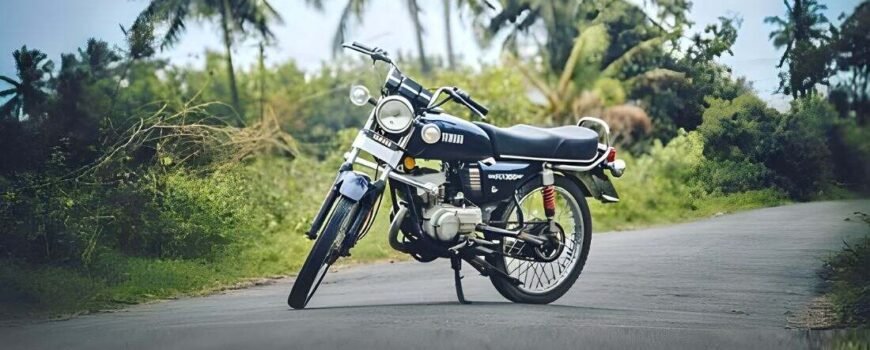
Yamaha RX 100 (RX 100) One of the best examples of simplicity/classic and sporty looks, these simple looks have not been disapproved by consumers for many years. Compact bodywork, light weight and subtle styling combine to make a classic bike that still entices riders years after production ended. Easy to manage yet retains that unique road presence, the bike has a straightforward build.
An old-school round halogen headlamp, circular-shaped rearview mirrors finished in chrome at the front and retro-styled analog instrument cluster as well as a narrow handlebar for comfy riding posture are few highlights of the RX 100. The sculpted blue Yamaha badged fuel tank, matte effect paint finish, single-piece flat seat and chrome finished exhaust and side panels make it more retro-classic. Spoke wheels, subtle graphics and shiny metal bits give the motorcycle some aged elegance.
The city commuting RX 100 is a very quick bike because of its light weight chassis, compact wheelbase and slim dimensions. Its also reassures while you are on open roads. It lacks the extra styling cues of today’s LED hardware or a digital display, but that timeless design has helped keep it a long-term fixture in Seiko’s lineup.
Yamaha RX 100 Mileage and Fuel Economy
RX 100,The RX appear in the top ten list of powerful bikes with fuel efficiency. Fuel consumption, in mild to moderate riding conditions (and careful highway cruising) of the original 98cc, two-stroke engine is approximately 40-45 km/l; figures as high as 45-50 km/l are possible under such circumstances; actual fuel economy for all motorcycles will depend on road and motorcycle condition, traffic density and maximum speed rider.
It gets a 10.5-litre fuel tank, and will be good for some 420–500 km on full depending on riding style Carburettor Cleaning, Periodic servicing, Aeration cleaner replacement & deficit air-filter replacement leads to proper fuel delivery and constant tyre pressure.
Even though modern day four-stroke motorcycle engines are very fuel efficient, RX 100 is famous for its impressive acceleration and lightweight coupled with decent mileage. It was also one of the reasons RX 100 remains a legend in the motorcycle circles across India—a low fuel sip capability along with an feel-good riding experience.
Yamaha RX 100 SAFTY FEATURES AND BRAKING SYSTEM
Back in the early days of motorcycle design, long before anyone had heard of active safety, this was the way motorcycles were designed. Thus safety assists as ABS (Anti-lock Braking System), traction control using riding modes, and disc brakes have been omitted from the original model. But with your low lightweight frame and lovely smooth normal riding handling.
The RX 100 uses 130 mm drum brakes at both ends. These non-adjustable drum brakes are more than adequate to handle the 103 kg (227 lb) dry weight of the bike, but they need to be balanced up well and maintained if you want them to work every time. Other features it comes with is the telescopic front forks and dual rear shock absobers, that helps in absorbing bumps or irregular surface improving ride comfort.
The RX 100, with a light frame, low seat height and almost ideal weight distribution can tackle everything from a relaxed inner city commute to short highway rides. It doesn’t feature a plethora of high-tech safety kit, as is the norm today but contemporary riders have been reporting decent steering feel and control response during recent use — handling and mechanical set up.
When launched, the new-generation RX 100 from Yamaha is likely to be equipped with single-channel ABS as well as front disc brakes along with tubeless tyres and LED lighting – all characteristic of Yamaha that reflects the company’s seriousness about meeting evolving safety compliance norms in India that have made these elements essential for safer riding.
Yamahafx100 Features and Technology
The design of the Yamaha RX 100 is quite basic but it was functional at its time. The new bike did without any of the gadgetry present on modern motorcycles, but its simplicity, light weight and strong mill combined with user-friendly ergonomics made it one of this generation’s most successful models. Not awash in electronic features, but fun and reliable to ride, easy to maintain.
Key Features
- 98cc air-cooled, single-cylinder, two-stroke engine
- 4-speed constant-mesh manual gearbox
- That low is helped by a 103 kg chassis.
- Classic retro round halogen headlamp
- Analog speedometer and instrument cluster
- A 10.5-litre fuel tank additionally ensures extended riding range.
- Kick-start system
- Improved Ride Comfort Once the Factors of Telescopic Front Suspension
- Compensation of dual back dampers
- Front and rear drum brakes
- Two-stroke sounds like chrome-piped exhaust
- Daily Commuter Unit Comfortable + One Piece Seat
Direct Fuel System to Clean Carburetors
And although the original Yamaha RX 100 featured no LED lighting, Bluetooth connectivity, USB charging and TFT displays (nor did it have navigation and ABS systems; two items which these days are basically standard on even basic bikes), its simplicity is one reason it’s still so loved by purists. If Yamaha re-launches the new RX 100, it should feature LED lights, semi-digital instrument cluster, alloy wheels (with front disc brake with ABS), fuel injection and BS6/OBD emissions compliant engine while retaining the iconic retro look of this motorcycle.
Yamaha RX 100 vs Competitors
The Yamaha RX 100 is one of those motorcycles which never quite go out of fashion because although the bike isn’t manufactured any longer, the myth endures and modern retro motorcycle styling is more mainstream than even a few years ago. Given the details, it’s likely duck battles in the retro motorcycles front with other fan-favourite machines like the Royal Enfield Hunter 350, TVS Ronin, Honda CB350RS and Kawsaki W175.
They always say that the RX 100 is one of RT’s light weight, zippy throttle response and a fun bike to ride. For larger power generators, simple mechanicals, high-tech safety items and bile displays as easily because they’re used to be but it’s the RX 100 its classic from styling legendary popularity that it is getting better.
If the RX 100 can be updated with new-age tech and checked through the with a coat of BS6 paint while still keeping all of its classic character — as Yamaha’s new wave of retro motorcycles, such as Vintage 1977 series they unveiled in March — it could even be one of India’s most choice entry-level retros. How it compares to today’s plethora of existing retro bikes all comes down to the final specs and price.
A Buyer’s Guide on Yamaha RX 100 for Sale
However, the RX 100 is a second-hand bike which ceased production in 1996 and thus requires to be checked on ground level if you are actually buying one. With good cars so scarce, collectors are battling for only the finest restore originals resulting in prices that have skyrocketed.
Before the purchase, they should check for registration certificate (RC), engine number, chassis number, insurance and ownership verification. Additionally, check the papers for both legal and registration pending matters related to the motorcycle.
Inspect the engine for signs of black smoke, eliminate knocking sounds, check any leakage of oil and also drive the automobile at normal conditions. RX 100 is a fitted with a two-stroke engine, little smoke is normal but lots of smoke maybe indicating incorrect use or really stressed the rings or an extremely poor quality motor unit. Keep inspecting the gearbox, clutch, suspension and braking system and electrical system and tyres.
First look for an accident indicator or rusted places as well as reduced high quality alterations. The RX 100 has been through lot of modding over the years which is why original parts like fuel tank, exhaust, speedometer, wheels and engine components are usually considered invaluable. Typically, stock parts sell for a lot more